


Aragón has quickly moved from emerging option to front-rank European contender for hyperscale and large-scale Data Centre development. The reason is simple, the region combines energy abundance, practical buildability, and institutional momentum, the three fundamentals investors look for when placing long-life digital infrastructure.
Below is a deeper look at what’s driving the shift, with supporting data points and recent market signals.

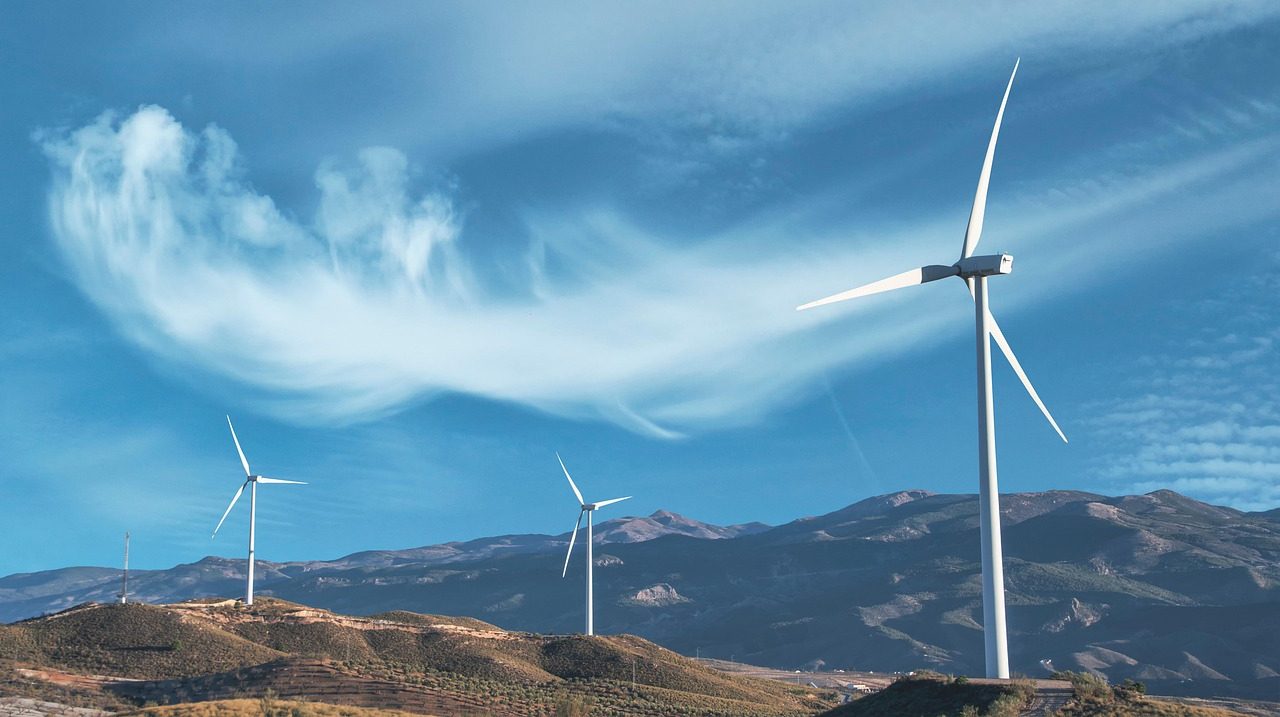
1) Renewable energy isn’t a slogan here, it’s the backbone of the grid
A major differentiator for Aragón is how strongly its installed generation base aligns with the needs of modern Data Centres: large volumes of low-carbon electricity with credible pathways to additional capacity.
Red Eléctrica (Spain’s grid operator) reported that Aragón’s installed power mix is already heavily renewable. 80% of installed capacity uses natural resources, led by wind (46.2%), followed by solar (22.9%) and hydro (10.9%).
The same REE note highlights that Aragón added 651 MW of new wind and solar PV in 2024, increasing renewable installed capacity by 7.1% vs. 2023.
Why this matters for Data Centres:
- Investors can structure credible 24/7 carbon-aware strategies (PPAs, hybrid procurement, storage roadmaps) in a region where renewables are already dominant.
- Grid conversations start from “how fast can we connect and expand?” rather than “is clean power even available?”
2) A real hyperscale cluster is forming and capital is following it
Aragón is no longer potential. It’s already attracting hyperscalers and large platforms with multi-year commitments. Some recent selected investment signals:
- AWS announced a major expansion in Aragón. €15.7bn to expand existing campuses and add a new location in Zaragoza, with expectations of significant job creation in the region.
- Reporting on the broader wave of commitments has put the combined announcements from major players (including hyperscalers and platforms) in the tens of billions of euros.
- fDi Intelligence (citing Colliers) noted Aragón’s current installed capacity around 108 MW IT load, and forecasts suggesting Aragón could reach ~1,608 MW IT by 2030, a scale that places it firmly into “major European hub” territory.
This is what cluster formation looks like in practice:
- As soon as one hyperscaler commits, it helps pull in ecosystem investment, grid upgrades, fibre expansions, contractors, specialist suppliers, and skills pipelines.
- Multiple campuses in the same region create a repeatable build environment, faster delivery, more predictable permitting, and stronger local capability.
3) Water and cooling: Aragón’s advantage is the ability to design responsibly
Cooling strategy is now a board-level topic in Data Centres, especially in warmer climates and water-sensitive regions. Aragón’s story is increasingly about planning, transparency, and engineering choices rather than simplistic water/no water headlines.
A reported reference point from regional coverage, AWS indicated that when fully built out, water needs for cooling could be ~800,000 m³ per year, framed as a small fraction of the Ebro’s flow as it passes Zaragoza.
At the same time, the direction of travel across the industry is clear:
- More low-water designs (including advanced air cooling approaches and closed-loop strategies)
- More water stewardship expectations from authorities and communities
- More emphasis on heat reuse and energy efficiency as permitting and public acceptance factors
The practical advantage Aragón offers is not that water is unlimited, but that the region can support well-governed, engineered cooling solutions at scale, when paired with strict environmental management.
4) Zaragoza: the logistics-and-connectivity multiplier
Zaragoza is becoming the focal point because it is buildable and connected:
- Strategically positioned between Madrid and Barcelona
- Strong transport connectivity supporting heavy construction logistics and ongoing operations
- A growing industrial base that supports supply chain depth and workforce availability
When investors evaluate hyperscale feasibility, this matters as much as power:
- Faster construction cycles
- More reliable delivery of critical equipment
- A deeper pool of engineering and industrial services over time
5) Policy and institutional support: speed and clarity is the new currency
Large Data Centres require planning certainty. Land, grid, water strategy, environmental constraints, and permitting timelines. Aragón has been using institutional mechanisms to accelerate complex projects while keeping them structured.
For example, Aragón’s government has advanced approvals/recognition for major projects (e.g., Project of General Interest approaches), which is a strong signal to international investors that the region is serious about delivery, not just announcements.
What the event discussions highlighted: building efficiently, sustainably, responsibly
Discussions at the event focused on la construcción y la eficiencia de grandes infraestructuras tecnológicas with recurring themes that reflect where the European market is heading:
- Energy efficiency as a design constraint (not an afterthought)
- Sustainable construction and embodied carbon management
- Environmental responsibility (biodiversity, water stewardship, local engagement)
- Resilience and compliance for mission-critical facilities
This is exactly the frame investors, planners, and communities increasingly expect.
Dexmah’s role in sustainable, resilient Data Centre delivery
At Dexmah, we support the shift toward Data Centres that are not only robust and compliant but also aligned with decarbonisation goals and environmental expectations.
Our expertise spans key areas that repeatedly determine project success:
- Advanced fire protection systems for Data Centres (mission-critical risk reduction and life-safety engineering)
- Integration of renewable energy technologies, including hydrogen solutions where appropriate
- Environmental and ecological risk mitigation (planning support, site risk controls, stakeholder alignment)
- Resilience planning for hyperscale and large-scale infrastructure
Looking ahead, Dexmah leadership will continue contributing to industry dialogue, sharing practical insights on fire safety engineering, renewable integration, and sustainable design for hyperscale delivery.
Aragón is clearly on the map and Zaragoza is at the centre of it
Aragón’s proposition is now well-defined:
- A renewable-heavy installed base (and accelerating additions)
- Concrete hyperscale investment momentum
- Engineering pathways for responsible cooling and environmental performance
- Institutional mechanisms that improve delivery certainty
For international investors seeking resilient, energy-efficient, future-ready infrastructure inside the European market, Aragón has become a serious contender and Zaragoza is emerging as one of the most important nodes in Spain’s digital infrastructure expansion.
Aragón’s Data Centre momentum is accelerating and the projects that succeed will be the ones that get safety, resilience, sustainability, and delivery certainty right from day one.
If you’re evaluating a site, planning a new build, or upgrading an existing facility, we’d be glad to share what we’re seeing on the ground and how Dexmah can support your programme, from fire safety engineering and risk mitigation to renewable integration and resilience planning. Get in touch here to find out we can assist.
You can also view our full list of services here.